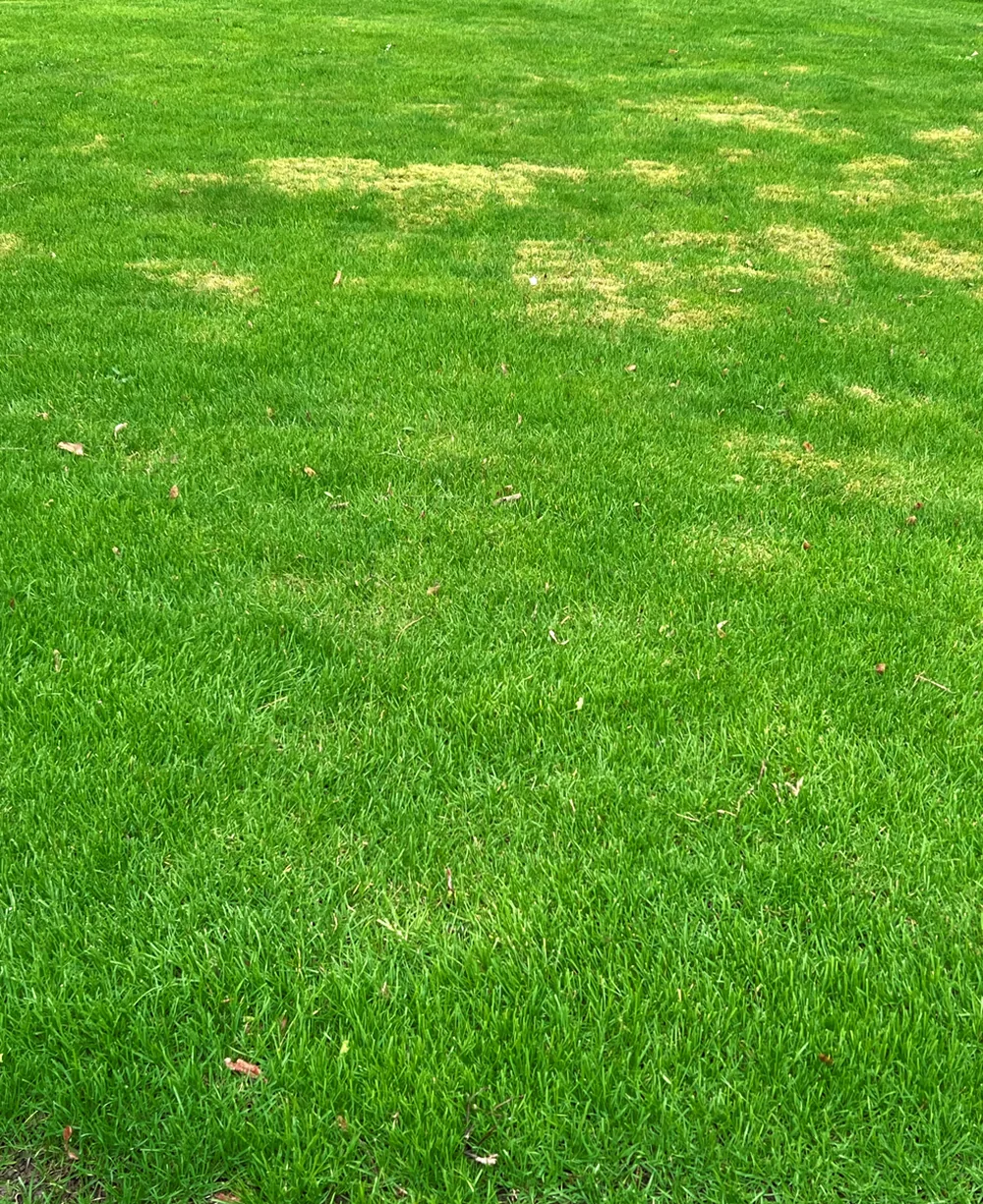
When brown patches show up in your lawn, it is easy to worry. The challenge is that brown patches do not point to just one problem. They may be caused by lawn disease, irrigation problems, poor watering habits, drought stress, or uneven sprinkler coverage.
In the Charlotte area, this is a common lawn concern during the growing season. The good news is that many brown patches are fixable when the real cause is identified early.
At FineTurf, we help homeowners make sense of what the lawn is saying so the correct next step becomes clear.
Brown Patches Are a Symptom, Not the Diagnosis
One of the biggest mistakes homeowners make is assuming every brown patch means the same thing. In reality, brown grass is only a symptom. It tells you the lawn is under stress, but it does not tell you exactly why.
That stress may come from:
- Disease pressure
- Irrigation problems
- Too much or too little water
- Poor drainage
- Heat stress
- Soil compaction
- Shallow root development
Proper diagnosis matters because two lawns can look similar and still need different solutions. One may need disease control products. Another may simply have a sprinkler or coverage issue.
You are trying to protect your investment and stop the problem before it spreads. FineTurf’s role is to guide you toward the right fix.
Is the Grass Dead or Just Stressed?
Before doing anything else, ask whether the grass is dead or simply stressed. Stressed grass can often recover once the underlying problem is corrected. Dead grass may need repair after the cause is addressed.
Signs the lawn may be stressed
- There is still some green mixed into the area
- The lawn improves after rainfall or deeper watering
- The grass remains rooted in the soil
- The pattern seems tied to sun exposure or sprinkler coverage
Signs the damage may be more serious
- The patches keep expanding
- The grass pulls up easily
- The turf looks thin, matted, or collapsed
- New areas nearby begin turning brown
These clues help, but brown patches often look simpler from a distance than they really are.
Could It Be Brown Patch Disease?
In Charlotte on tall fescue lawns, brown patch disease is one of the most common causes of discoloration during warm, humid weather. It tends to become active when nighttime temperatures are above 65 degrees, day time temperatures are above 85 degrees and the lawn remains wet for long periods.
Common signs of disease-related brown patches
- Circular or irregular brown areas
- Patches that get larger over time
- Grass that looks tan, smoky, or blighted
- Damage that worsens during hot, humid weather
Tall fescue is especially vulnerable in summer. Still, many water-related problems can look almost identical to disease from a distance.
Could It Be an Irrigation or Watering Problem?
Yes. Many brown patches are tied to irrigation performance or watering habits. A lawn may dry out because of a broken head, weak pressure, or missed spray pattern. It can also struggle from staying too wet, which weakens the turf and increases disease pressure.
Common water-related causes of brown patches
- Broken, clogged, or misaligned sprinkler heads
- Uneven coverage across irrigation zones
- Runoff on slopes or compacted soil
- Watering too often and too shallowly
- Watering late in the evening
Irrigation problems often create visible patterns such as arcs, strips, or sections that match zone coverage.
How to Tell the Difference
The issue may be more likely disease-related if:
- The patches expand outward
- The lawn stays damp for long periods
- Damage appears during hot, humid weather
- Your not on a fungicide program
- The issue occurs between May-August
The issue may be more likely irrigation-related if:
- The damage follows sprinkler patterns or zone lines
- Some sections stay green while others stay dry
- The lawn improves after deep, even watering
- The affected spots are near pavement, slopes, or high-heat areas
Sometimes both issues are involved. Poor drainage or overwatering can increase disease pressure, while drought stress can thin the lawn and slow recovery.
Two lawns can look similar from the street and need completely different fixes. Before you spend money on products or repairs, identify whether you’re dealing with disease, watering, or both.
What Should You Do First?
- Do not automatically add more water. Extra moisture may help a dry area, but it can worsen disease pressure.
- Run each irrigation zone and watch carefully for broken heads, missed areas, runoff, or weak coverage.
- Water deeply and early in the morning rather than lightly and frequently or late at night.
- Avoid mowing too short. A stressed lawn needs as much strength as it can keep.
- Get a professional evaluation if the patches are spreading or you are unsure of the cause.
How FineTurf Helps
Brown patches can be caused by disease, irrigation issues, or both. FineTurf inspects the lawn, looks for pattern clues, evaluates stress factors, and explains what is happening in plain language before recommending the next step.
FAQ About Brown Patches in Lawns
Are brown patches always caused by disease?
No. Brown patches can be caused by disease, irrigation problems, drought stress, poor watering habits, or several issues working together.
Should I water more when I see brown patches?
Not always. More water can help in some cases, but it can also make disease worse. It is better to identify the cause first.
Can brown grass turn green again?
Sometimes, yes. If the grass is stressed rather than dead, it may recover once the underlying issue is corrected.
When should I call a lawn care professional?
If the patches are spreading, not improving, or you are unsure whether the issue is disease or watering-related, it is smart to have the lawn evaluated.
The Bottom Line
If you are noticing brown patches, do not assume there is one simple answer. The most common causes are disease and irrigation or water-related issues. Catch the problem early, avoid guesswork, and get clear guidance so your lawn has the best chance to recover.
Not sure if it’s disease or irrigation? Don’t guess and pour money into the wrong fix. Reach out for an evaluation or grab a free quote and we’ll figure it out with you.