
Tree & Shrub Insect Control Charlotte, NC
Hidden pests like aphids, scale, bagworms, and spider mites can quietly damage your trees and shrubs before you notice the problem. At Fine Turf, our tree insect control in Charlotte, NC uses a proven 7-visit program that targets pests at their most vulnerable stages, protecting your landscape investment and keeping your ornamentals healthy and vibrant year-round.
This Service Requires Our Lawn Care Program
Tree and shrub care is offered exclusively to customers enrolled in one of our lawn care programs. This ensures we can provide comprehensive care for your entire property.
VIEW LAWN CARE PROGRAMS7-Visit Tree & Shrub Care Program
Our comprehensive program combines insecticide, fungicide, and fertilizer treatments throughout the year. By timing applications to match pest and disease cycles, we protect your trees and shrubs year-round.
Visit 1
January
Insecticide treatment targeting dormant pests and overwintering insects
Visit 2
Feb/March
Granular fertilizer application to promote healthy spring growth
Visit 3
April
Insecticide and fungicide combo as new growth emerges
Visit 4
June
Insecticide and fungicide combo as new growth emerges
Visit 5
July/August
Insecticide and fungicide protection during peak growing season
Visit 6
September
Insecticide and fungicide during summer stress period
Visit 7
November
Final insecticide treatment before winter dormancy
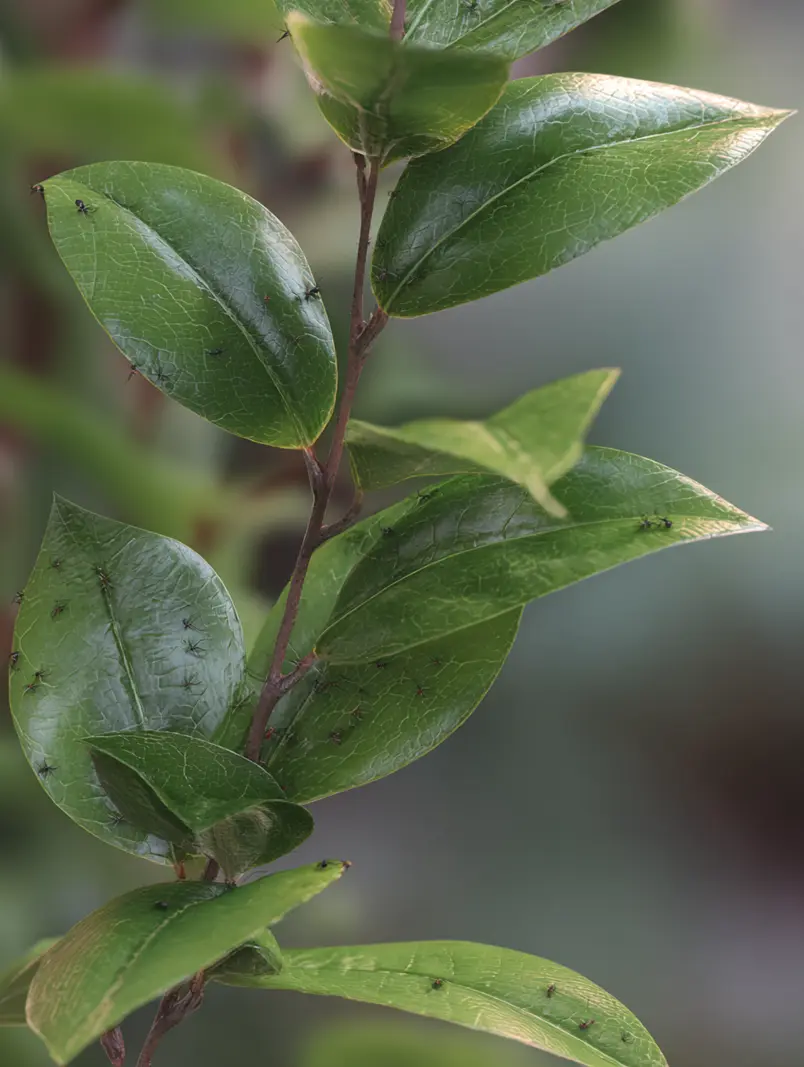
Insects Cause Damage You Cannot Ignore
Ornamental pests strike fast and hard. Aphids can overrun tender new growth in just days. Bagworms defoliate evergreens in weeks. Scale insects quietly sap vitality until plants suddenly decline. By the time visible damage appears, the harm is often extensive — proactive tree insect control prevents this cycle entirely.
Aphids clustering on new growth and excreting sticky honeydew
Scale insects weakening stems and causing branch dieback
Bagworms defoliating evergreen trees and shrubs
Lace bugs causing stippled, bleached foliage on azaleas
Spider mites causing bronze discoloration in hot, dry weather
Proactive Protection That Works
Targeted treatments that match insect life cycles
Coverage on all susceptible ornamental plants
Products selected for effectiveness with minimal environmental impact
Regular monitoring during lawn visits for early detection
Integrated with fertilization and disease control for complete care
Insects We Target
Aphids
Small, soft-bodied insects that cluster on new growth. They suck plant sap and excrete honeydew that attracts sooty mold. Multiple generations per year.
Scale Insects
Appear as small bumps on stems and leaves. Protected by a waxy coating, they drain plant nutrients slowly. Best controlled during the crawler stage.
Bagworms
Caterpillars that build distinctive bags from plant material. They can completely defoliate evergreens like junipers and arborvitae. Must be treated when young.
Lace Bugs
Feed on leaf undersides, causing stippled, bleached foliage. Common on azaleas, rhododendrons, and pieris. Damage is cosmetically significant.
Spider Mites
Tiny pests that thrive in hot, dry conditions. They cause bronze or stippled discoloration and produce fine webbing. Population can explode quickly.
Whiteflies
Small white flying insects that congregate on leaf undersides. They suck sap and excrete honeydew. Often difficult to control without repeated treatments.
How FineTurf Works
Protecting your trees and shrubs from insects is straightforward with our proven approach.
1
Start with one of our lawn care programs. This gives us comprehensive access to care for your entire property.
2
Add Insect Control
We assess your ornamental plants and schedule seven treatments throughout the year targeting key pest windows.
3
Enjoy Pest-Free Plants
With consistent protection and regular monitoring, your trees and shrubs stay healthy and free of damaging insects.
Insect Control Questions Answered
What insects commonly attack shrubs in Charlotte, NC?
Common threats include aphids, scale insects, spider mites, lace bugs, whiteflies, and bagworms. Aphids cluster on new growth and excrete sticky honeydew that attracts sooty mold. Scale appears as small bumps on stems and leaves. Bagworms defoliate evergreens rapidly. Our 7-visit tree insect control targets each pest during its vulnerable stage to stop damage early.
Are the insecticides safe for bees and other pollinators?
We use targeted products and application methods to minimize impact on beneficial insects. We avoid treating plants during active bloom periods and apply products when pollinators are less active. Our technicians are trained to identify flowering plants and adjust treatment timing accordingly. We use systemic products where appropriate to reduce exposure to non-target insects. For more on pollinator-friendly practices, see the EPA Pollinator Protection page: https://www.epa.gov/pollinator-protection
Why do I need seven treatments per year?
Different insect pests are active at different times and many produce multiple generations per year. Aphids can go through numerous life cycles from spring to fall. Scale insects have specific crawler stages when they are vulnerable. Bagworms emerge in early summer. Our seven-visit schedule ensures we treat during each critical window, providing continuous protection throughout the growing season.
Protect Your Trees and Shrubs from Insect Damage
Do not wait until you see damaged leaves and stressed plants. Get proactive insect control that keeps your landscape looking its best.