Bushes have yellow leaves most often because of a watering problem, a nutrient shortage tied to soil pH, normal seasonal leaf drop, or insects like lace bugs and scale. Where the yellow leaves appear can help you identify the cause. Check whether they’re on older or newer growth and whether they affect the whole shrub or just a few areas. Most causes are fixable once you identify them.
Your shrubs frame your home. When the azaleas by the front walk or the hollies along the foundation start turning yellow, it’s hard not to notice, and harder not to worry you’ll lose them. Shrub problems in Charlotte follow a handful of predictable patterns, and once you know what to look for, you can usually narrow it down in a few minutes.
Is it normal for bushes to get yellow leaves?
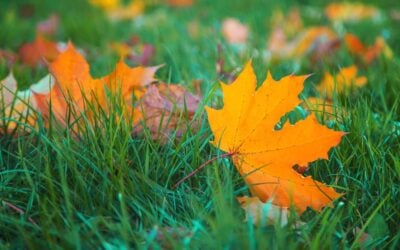
Sometimes, yes. Evergreen shrubs don’t keep their leaves forever. Hollies, gardenias, camellias, azaleas, and ligustrum shed some of their oldest leaves each year, usually in spring as new growth pushes out. If the yellow leaves are on the inside of the plant, the new growth at the tips looks healthy, and the yellow leaves drop within a few weeks, that’s normal shedding. No treatment needed.
Why do boxwoods turn yellow or orange in winter?
Boxwoods often take on a yellow, orange, or bronze cast in winter, especially on the sunny, windy side of the house. This winter bronzing usually greens back up in spring. If a boxwood yellows in summer, thins out, or browns in sections, look at the roots and soil instead.
What causes yellow leaves when it isn’t normal?
Could too much or too little water be the problem?
Water is the most common cause we see in the Charlotte area. Our Piedmont clay holds water like a bowl, so shrubs in low spots, beside downspouts, or in beds where lawn irrigation runs every day can sit in soggy soil. Roots that can’t breathe start to rot, and the leaves turn yellow, then brown. Drought does similar damage in July and August. Push a screwdriver or your finger 4 to 6 inches into the soil near the base of the shrub. If it’s soaking wet days after rain, it’s getting too much water. If it’s dry and hard, it needs more.
Established shrubs generally do well with about 1 inch of water per week during summer heat, delivered through deep, less frequent soakings. Sprinkler zones set for lawns often overwater beds. Our irrigation services can adjust zones so lawns and beds each get what they need.
Is it a nutrient problem?
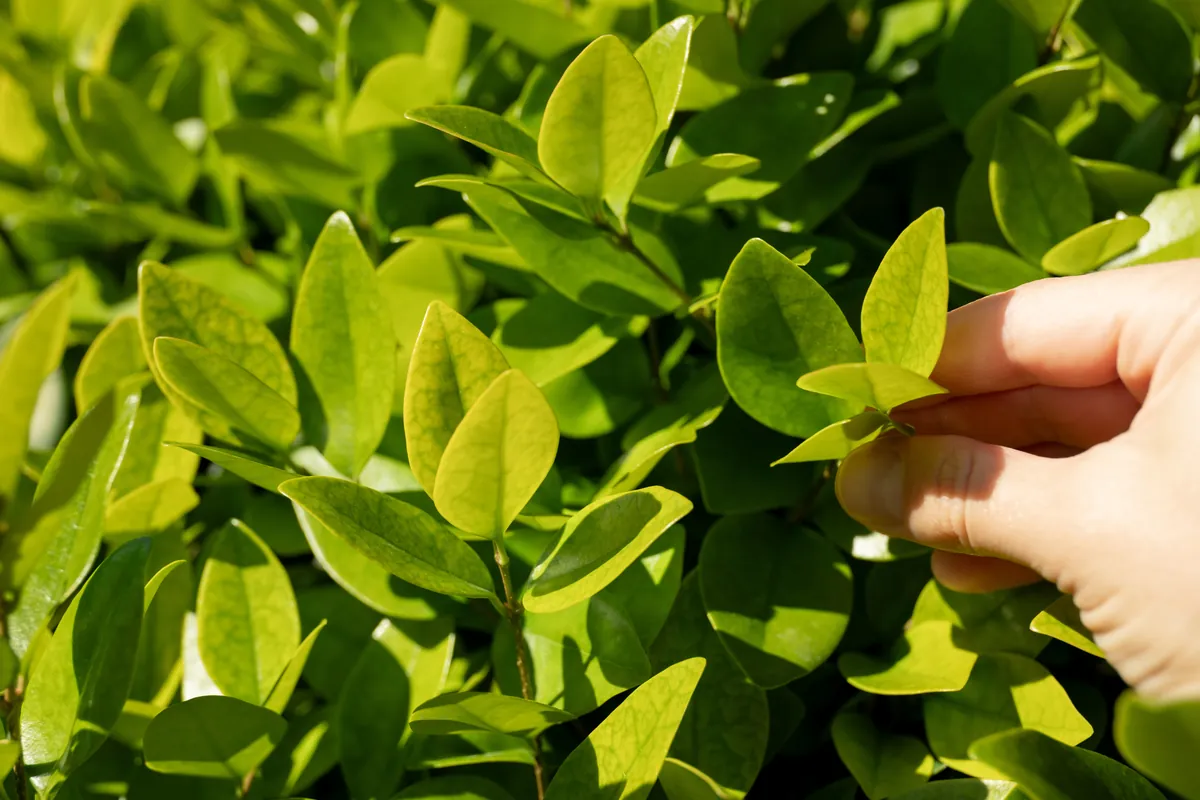
Look at the leaf veins. If newer leaves turn yellow while the veins stay green, a pattern called interveinal chlorosis, the shrub likely can’t take up enough iron or manganese. Azaleas, gardenias, hollies, and camellias are acid-loving and especially prone to it. In Charlotte, the culprit usually isn’t a lack of iron in the soil. It’s soil pH that has crept too high near concrete foundations, driveways, and walks, or lime that drifted into beds from the lawn. If older leaves turn evenly pale yellow across the whole plant, low nitrogen is more likely.
Could insects be causing yellow leaves?
Two pests show up in Charlotte landscapes every year, and our tree and shrub technician treats both every season:
- Azalea lace bugs: leaves look speckled or bleached on top, with dark, varnish-like spots on the undersides. Damage is worst on azaleas in full sun.
- Tea scale: yellow blotches on top of camellia and holly leaves, with a white, cottony coating underneath.
Spider mites cause a similar fine, dusty stippling during hot, dry summers. Flip the leaves over. The underside usually tells you more than the top.
Two quick checks narrow down most yellow-leaf problems: push a finger into the soil at the base of the shrub, and flip a few leaves over. Wet clay, dry soil, or something living on the underside will usually point you to the cause.
Could it be a disease?
Indian hawthorn and red tip photinia commonly get a leaf spot disease that starts as small red or purple dots, turns leaves yellow, and causes heavy leaf drop. Root rot in wet clay causes yellowing and sudden decline on azaleas, boxwoods, and other shrubs. Diseases need an accurate diagnosis, because control products only work when they’re matched to the right problem and applied at the right time.
Could planting or mulching be the cause?
Yes, and we see it often around newer homes. Shrubs planted too deep, or with the root ball still tightly wrapped, struggle to establish. So do shrubs buried under mulch piled against their stems. Keep mulch 2 to 3 inches deep and pulled a few inches back from the trunk so the base of the plant can breathe.
How do you fix bushes with yellow leaves?
- Check the pattern: old inner leaves, new leaves with green veins, the whole plant, or spots.
- Check soil moisture before adding more water.
- Flip leaves and look for insects on the undersides.
- Fix drainage and adjust irrigation zones that overwater beds.
- Correct mulch depth and pull it away from stems.
If you’re still not sure what’s going on, a trained eye helps. FineTurf’s tree and shrub care program is handled by a dedicated technician who focuses only on ornamental plants, treating them for disease and insects and fertilizing them based on what each plant needs. We serve homes across Charlotte, Matthews, Huntersville, and Fort Mill. When bushes have yellow leaves, catching it early is far easier than saving a shrub that has already declined.
You want a yard you’re proud to come home to. Get your free quote and let FineTurf help your shrubs and lawn look their best all year.
Frequently asked questions about bushes with yellow leaves
Should I fertilize bushes that have yellow leaves?
Not until you know the cause. If the problem is too much water, root damage, or high soil pH, fertilizer won’t fix it. Check soil moisture and the leaf pattern first.
Will yellow leaves on bushes turn green again?
Usually not. Once a leaf turns fully yellow, it typically drops. The goal is healthy new growth that stays green after the cause is corrected.
Why are my azalea leaves yellow with green veins?
That’s interveinal chlorosis, usually caused by soil pH that’s too high for acid-loving azaleas to absorb iron and manganese.
Why are only the inside leaves of my holly turning yellow?
That’s usually normal seasonal shedding of the oldest leaves. If the new growth at the tips looks healthy, the shrub is fine.
Yellow leaves are a symptom, not a diagnosis. If you’re not sure what’s behind them, reach out or grab a free quote and we’ll take a look.