
New fescue grass seed needs frequent, light watering, 3 to 4 short cycles a day, for the first two weeks to keep the soil surface moist without turning muddy. From day 15 through day 28, that drops to 1 to 2 cycles a day as roots dig deeper. By week 4 to 8, most Charlotte lawns are ready for a normal schedule of about 3 waterings a week, in the early morning only. Exact run times depend on whether you are using rotary heads or pop-up spray heads.
If you have ever stood over a sprinkler timer wondering whether you are drowning your new seed or letting it bake in the Carolina sun, you are not alone. Seeding a fescue lawn feels like a leap of faith. You put down good seed, maybe even paid for professional aeration and overseeding, and then you are left guessing at a watering schedule with no feedback until weeks later. We built our watering guide after walking hundreds of Charlotte-area yards through this exact stretch, and the schedule below is the one our crews hand every seeding customer.
How Much Water Does New Fescue Seed Need in the First Two Weeks?
This is the germination phase, and the goal is simple: keep the seed and soil surface consistently moist, never muddy. That means watering 3 to 4 times a day. If you run rotary heads, that is 5 to 7 minutes per cycle. Pop-up spray heads need 3 to 4 minutes per cycle. We typically suggest start times around 8 a.m., 11 a.m., 2 p.m., and 5 p.m., which keeps the top layer damp through the heat of the day without leaving it soaked overnight. Watch the soil rather than the clock, and adjust up if it is drying too fast in full sun, or skip a cycle and eliminate the earliest one if a rainy stretch keeps it soggy on its own.
Why Does New Fescue Seed Need Watered So Often at First?
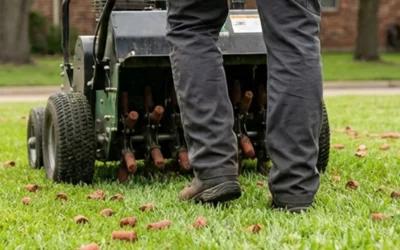
Fescue seed germinates in the top quarter to half inch of soil, and at this stage it has no root system to draw moisture from deeper down. A few hours of direct sun on Charlotte's clay-heavy Piedmont soil is enough to dry that thin layer out and kill a germinating seed. We see this most in compacted yards where the surface crusts over and sheds water instead of absorbing it, which is a big reason professional aeration and overseeding matters here. Loosening the soil first gives seed better contact with the ground and lets water soak in instead of running off.
How Does Watering Change Between Day 15 and Day 28?
This is the rooting phase, and the goal shifts from keeping the surface wet to encouraging roots to grow deeper. Cut back to 1 to 2 watering cycles a day, run 12 to 15 minutes on rotary heads or 5 to 7 minutes on pop-up sprays. Suggested start times are around 10 a.m. and 3 p.m. Keep adjusting based on how the soil actually looks and feels rather than sticking to a fixed schedule. This is also when you can begin mowing, typically around day 21 to 28 once fescue reaches about 4 inches tall.
When Can You Switch to a Normal Watering Schedule?
By week 4 to 8, most Charlotte fescue lawns have rooted enough to handle a normal schedule: about 3 waterings a week, in the early morning only, using your regular zone run times. The soil should stay damp, not soaked. Keep mowing regularly through fall until growth slows heading into winter. This is the point where an ongoing lawn care program with proper seasonal feeding keeps that new stand thickening up instead of stalling out.
- Days 1–14 (germination): 3 to 4 cycles a day — rotary heads 5 to 7 minutes, pop-up sprays 3 to 4 minutes
- Days 15–28 (rooting): 1 to 2 cycles a day — rotary heads 12 to 15 minutes, pop-up sprays 5 to 7 minutes
- Week 4 to 8 onward: about 3 waterings a week, early morning only
What About Rain, and What Mistakes Should You Avoid?
Cut back or pause your watering cycles whenever rainfall is doing the job for you. Every lawn drains and dries differently, so treat the schedule above as a starting point and adjust based on what the soil is actually doing. The two mistakes we see most often are moving to less frequent watering too soon, which lets the surface dry out and kills seedlings before they root, and leaving soil soaked for weeks on end, which starves roots of oxygen and invites fungal issues like damping-off in young grass. If you notice thin, gray, or matted patches, cut back on frequency first. Our disease control team can tell whether it is a watering issue or something that needs a targeted control product.
Frequently Asked Questions
How many times a day should I water new fescue seed?
Water 3 to 4 times a day for the first 2 weeks after seeding, then taper to 1 to 2 times a day from day 15 through day 28 as roots develop.
How long should each watering cycle run?
During the first 2 weeks, run rotary heads 5 to 7 minutes and pop-up sprays 3 to 4 minutes per cycle. From day 15 to 28, increase to 12 to 15 minutes for rotary heads and 5 to 7 minutes for pop-up sprays, but water less often.
When can I mow new fescue grass?
Most Charlotte lawns are ready for a first mow around day 21 to 28, once the new fescue reaches about 4 inches tall.
Should I still water if it rains?
Cut back or pause your cycles during consistent rainfall. Every lawn is different, so keep an eye on the soil and adjust rather than watering on autopilot.
When can I switch to a normal watering schedule?
By week 4 to 8, most fescue lawns are established enough for about 3 waterings a week, in the early morning only, using your regular zone run times.
Watering new fescue seed is not complicated once you know the phase you are in: frequent and light at first, tapering as roots take hold, then a normal early-morning schedule by week 4 to 8. If you would rather not manage sprinkler timers by trial and error through a Charlotte fall, our team handles the full process from soil prep through germination across Charlotte, Matthews, Huntersville, and Fort Mill. Schedule a professional aeration and overseeding consultation and we will build a watering plan around your yard and irrigation setup.