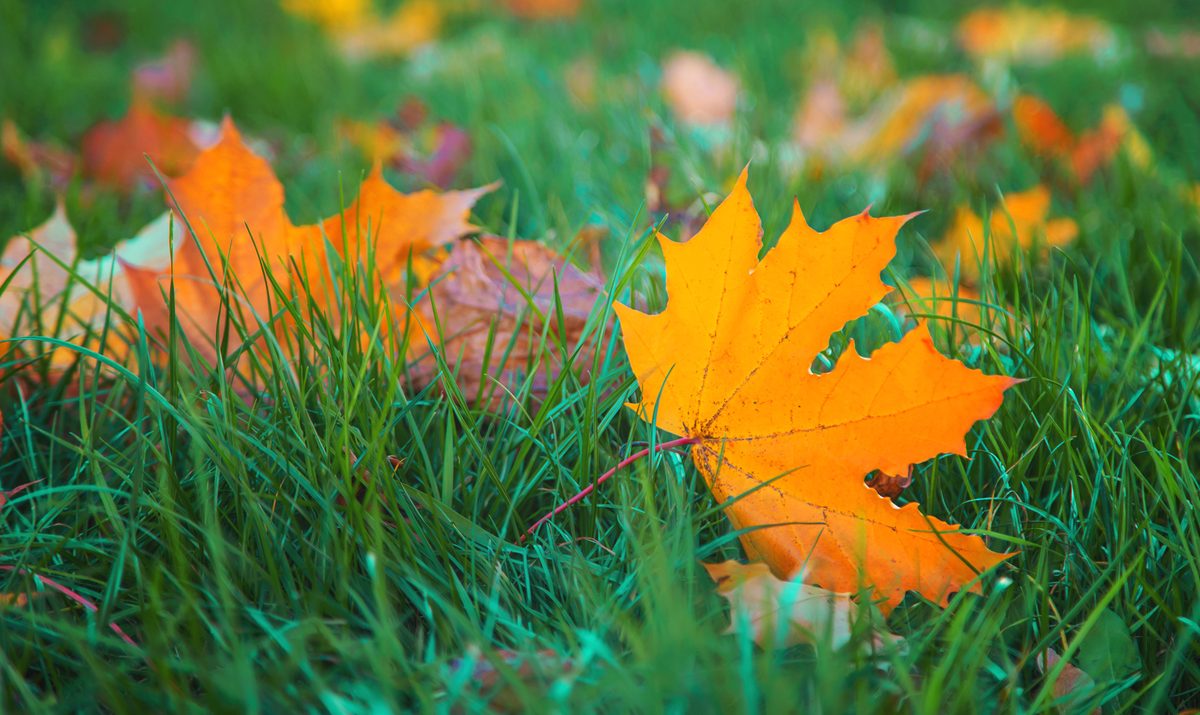
The best thing to do about leaves on the lawn is to mulch them with your mower when the layer is light and blow them off when they pile up or mat down. Don’t let a thick layer sit for more than about a week, especially on fescue you seeded this fall. Leaves block the sunlight your grass needs during its most important growing season.
You spent September and October getting the lawn right. Maybe you aerated and seeded, kept up with watering, and finally saw a carpet of new green blades. Then the trees let go, and every morning brings a fresh layer covering all that work. It’s frustrating, and it can feel like a losing battle. Our technicians see this on Charlotte lawns every fall, and the good news is that a simple plan keeps leaves from undoing your progress.
Why do leaves on the lawn hurt your grass?
Leaves themselves aren’t toxic to grass. The problem is shade and moisture. Tall fescue, the most common lawn grass in Charlotte, does its heaviest growing and root building from September into early December. A blanket of leaves cuts off the sunlight it needs to make food during that window.
What happens when leaves sit too long?
Wet leaves press flat into a mat after a few rains. Underneath, the grass turns yellow, then thin. Mats also hold moisture against the leaf blades and keep the soil surface damp and dark, conditions that favor turf disease. Newly seeded lawns are the most at risk because young seedlings have shallow roots and very little stored energy. We’ve walked onto properties in early December where a two-week leaf mat wiped out patches of new fescue that looked perfect in early November.
Do leaves matter on Bermuda or Zoysia lawns?
Less, but they still matter. Bermuda and Zoysia go dormant after the first hard frosts, usually by early November around Charlotte, so a light leaf layer won’t hurt them. Heavy piles left all winter, though, can slow spring green-up and hide weeds. Clear them before spring.
Should you mulch or blow your leaves?
When is mulching leaves into the lawn the best choice?
Mulch when the layer is light. A good rule from the field: if you can still see about half of the grass through the leaves, mow over them with your mower set at 4 inches. A mulching blade helps, and a second pass may be needed. The shredded pieces fall between grass blades, break down over winter, and add organic matter to our heavy Piedmont clay soil.
When should you blow leaves off instead?
Blow leaves off when they’re deep, wet, or matted, or sitting on new seedlings. Mulching a thick layer just makes a thick layer of smaller pieces. We recommend a blower over a rake, because raking can tear up new grass and disturb seedlings in soft soil. Work with dry leaves when you can, since they move easily on a lower blower setting.
The quick test: if you can still see about half of the grass through the leaves, mow them in at 4 inches. If you can’t, or they’re wet and matted, blow them off.
When do leaves fall in Charlotte, and how often should you clear them?
Leaf drop in the Charlotte area usually starts in late October and runs through the end of the year. Red maples, sweetgums, and tulip poplars drop early and fast, while many oaks hold their leaves until late December. Plan on clearing leaves about once a week during peak drop. Neighborhoods with mature canopy, like Myers Park and Dilworth, may need twice a week in November and December.
What should you do with the leaves you remove?
Shredded leaves make good bed mulch and compost. To haul them away, check your town’s yard waste rules, since collection differs across Charlotte, Matthews, Huntersville, and Fort Mill. Don’t dump piles along the lawn’s edge, where they’ll kill the grass underneath.
How do leaves affect your fall lawn treatments?
Fall fertilization feeds root growth, and fall weed control targets winter weeds like chickweed and henbit. Our fall fertilizer is granular, so it works its way down through leaves to the soil. Weed control is different. Our technicians spray the weeds they can see, and weeds hidden under leaves get missed. As long as leaves were cleared within 5 to 7 days before your visit, we’re good to treat. A year-round lawn care program times these visits around your lawn’s needs.
What if leaf mats already caused thin or bare spots?
Don’t panic. Once grass has died under leaves, it’s usually too late in the season to aerate, but you still have an option. Our aeration and seeding service includes free reseeding, so we can come back and put down more seed in thin or bare spots. If you notice brown patches with distinct rings or spots once mats are removed, it may be turf disease rather than simple smothering. Our lawn disease control service starts with an accurate diagnosis.
What is the simplest leaf plan for this fall?
- Mulch light leaf layers weekly with your mower set at 4 inches.
- Blow heavy, wet, or matted leaves off within about a week.
- Clear leaves within 5 to 7 days before scheduled lawn treatments.
- Remove heavy piles from dormant Bermuda and Zoysia before spring.
You don’t have to fight fall alone. Get your free quote and let FineTurf build a lawn care plan that protects the work you’ve put into your lawn this season.
Frequently asked questions about leaves on the lawn
Is it OK to leave leaves on the lawn over winter?
Not in a thick layer. A light layer of shredded leaves is fine, but whole leaves left all winter will mat down, block sunlight, and thin out fescue. Dormant Bermuda and Zoysia tolerate leaves better, but heavy piles should still come off before spring green-up.
Are mulched leaves good for my lawn?
Yes, in moderation. Shredded leaves break down over winter and add organic matter to Charlotte’s clay soil. Mulch only when you can still see about half of the grass through the leaves.
How long can leaves sit on new grass seed?
Clear leaves from newly seeded areas within a few days if you can, and no longer than about a week. Seedlings have shallow roots and limited energy, so they decline quickly without sunlight.
Do I need to clear leaves before a lawn treatment?
It helps. As long as leaves were cleared within 5 to 7 days before your visit, we’re fine to treat. Our granular fertilizer works its way under leaves, but technicians can only spray the weeds they can see, so leaf cover mainly affects weed control.
A leaf mat on new fescue does its damage in about two weeks, so a quick weekly pass beats one big cleanup in December. If thin spots have already shown up, reach out or grab a free quote and we’ll take a look.