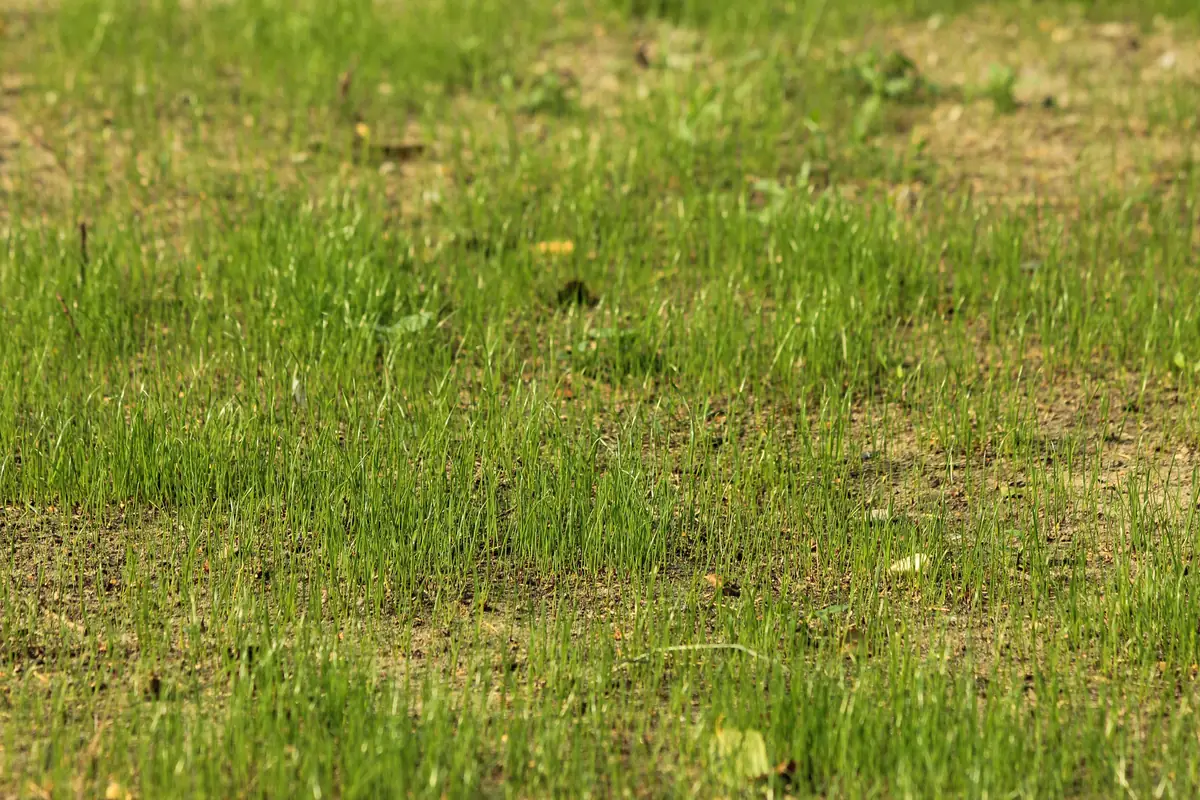
You water the whole lawn. You mow it the same. You spread the same products edge to edge. And yet, year after year, the same stubborn patch turns brown and thins out while the grass around it stays green. It’s enough to make you wonder if that one spot is just cursed.
It isn’t. When grass dies in the same place over and over, your lawn is telling you something specific about what’s happening below the surface. At FineTurf, we’ve diagnosed these exact patches in hundreds of yards, and the cause is almost never random. Once you know what to look for, that “dead zone” becomes the easiest part of your lawn to fix.
Here are the seven most common reasons grass dies in certain areas.
1. Compacted Soil Is Choking the Roots
Soil compaction is the silent culprit behind more dead patches than almost anything else. Where foot traffic, pets, parked trailers, or play sets press the soil down, the dirt particles squeeze together and crush out the air pockets roots need. Water runs off instead of soaking in, and roots can’t push deep enough to survive a hot week.
The tell: the dead area follows a walking path, a gate, or anywhere the family cuts the same corner. If a screwdriver won’t slide easily into the soil, you’ve found your problem. Core aeration relieves the pressure and lets that ground breathe again.
2. Drainage Problems Are Drowning or Starving That Spot
Grass needs water, but the same spot can die from too much or too little. Low areas collect runoff and stay soggy, suffocating roots and inviting disease. High spots and slopes shed water before it soaks in, leaving roots thirsty even after you’ve watered the whole yard.
How to read your low and high spots
Walk the lawn the morning after a heavy rain. Standing water that lingers for hours means a drainage issue you can correct with grading, a swale, or amended soil. A patch on a mound that’s always crispy needs targeted watering or a regrade so moisture stays put.
3. Too Much Shade for the Grass You Have
If a thinning patch sits under a tree, beside the house, or behind a fence, sunlight is likely the issue. Most lawn grasses need four to six hours of direct light a day. Take that away and the grass stretches, weakens, and slowly surrenders the ground to moss and bare dirt.
You have three honest options: thin the tree canopy to let light through, reseed with a shade-tolerant grass variety, or embrace the spot with mulch or a shade garden. Fighting full sun grass into a dark corner is a battle that rarely ends in your favor.
4. Pet Spots Are Burning the Lawn
That ring of dead grass with a suspiciously green edge has a four-legged explanation. Concentrated nitrogen and salts in pet urine overload the grass in one spot, scorching it much like over-fertilizing would. The bright green halo is the diluted edge actually thriving on the extra nitrogen.
The fix is simple but consistent: soak the area with water right after your pet goes to flush the salts through, and consider training pets to one mulched or gravel zone. Reseeding the burned center brings it back once the cause is managed.
One shortcut before you treat anything: read the edges of the patch. A sharp, straight line usually means something man-made—a buried footprint, a mower scalp, or a walking path. A soft, irregular edge points to something living or environmental—disease, pests, shade, or water. The shape of a dead spot is often the fastest clue to its cause.
5. Hidden Pests Are Feeding on the Roots
When a patch peels up like loose carpet or feels spongy underfoot, something may be eating the roots from below. Grubs and armyworms chew through grass so fast that a green lawn can turn ragged and brown in just a few days, often where birds or skunks have started digging for a meal.
The frustrating part is that by the time you see the damage, the feeding is already done. That’s why prevention beats reaction here, and it’s why our lawn care program includes preventative grub and armyworm control timed to stop these pests before they ever reach the roots. Proper identification and the right control product at the right time mean you’re protecting that spot instead of replacing it.
6. Lawn Disease Has Settled In
Fungal disease tends to show up as circles, rings, or blotchy patches that appear almost overnight, especially during humid stretches or after evening watering. Because fungus thrives on moisture sitting on the blades overnight, the same low or shaded spots flare up season after season.
Watering early in the morning, improving airflow, and avoiding heavy nitrogen during humid months all reduce the pressure. When disease is established, a targeted control product paired with those cultural changes clears it and keeps it from returning to its favorite corner.
7. Buried Debris or Scalping Is Sabotaging the Soil
Sometimes the answer is literally buried. Builder’s rubble, old concrete, gravel, or a thin layer of poor topsoil left from construction means there isn’t enough healthy ground for roots to take hold. The grass struggles in that exact footprint while the rest of the lawn thrives.
A high spot the mower scalps every week causes the same repeating bald patch. If you dig down a few inches and hit rock, sand, or rubble, the fix is removing the debris and bringing in quality topsoil before reseeding.
You Don’t Have to Keep Guessing
Here’s the encouraging part: every dead patch is a clue, not a curse. Compaction, drainage, shade, pets, pests, disease, and buried debris each leave a signature, and once you match the patch to the cause, the repair is usually straightforward. The homeowners who beat these spots simply stopped treating the symptom and started fixing the cause.
If you’d rather not play detective, that’s what we’re here for. FineTurf walks your lawn, identifies what’s really happening in that stubborn spot, and builds a plan to bring it back. Reach out for a free assessment, and let’s turn your problem patch into the best-looking part of the yard.
Frequently Asked Questions
Why does my grass die in the same spot every year?
A patch that dies in the same place each year points to a fixed underlying cause, usually compaction, poor drainage, shade, buried debris, or a recurring pest or disease. The condition stays put, so the dead spot does too until the cause is corrected.
Why is my grass dying even though I water it?
Watering can’t fix a problem that isn’t about water. If grass dies despite regular watering, suspect compaction blocking absorption, poor drainage drowning the roots, pet urine, or pests feeding below the surface.
How do I know if I have grubs or armyworms?
Grub-damaged grass lifts up easily like loose carpet because the roots have been chewed away, and you may notice birds or skunks digging in that area. Armyworms strip a lawn brown in a matter of days. Because the damage shows up after the feeding, our program includes preventative grub and armyworm control to stop them before they start.
Will reseeding a dead patch fix it?
Only if you fix the cause first. Reseeding over compacted soil, deep shade, or buried rubble just repeats the problem. Correct the underlying issue, then reseed, and the new grass has a real chance to take hold.
How can FineTurf help with recurring dead spots?
We diagnose the specific reason a spot keeps dying, then address it directly, whether that means core aeration, topdressing with compost, a targeted control product, or fresh seed. Reach out for a free assessment to get started.
Tired of babysitting the same dead patch season after season? Reach out for a free lawn assessment or grab a free quote and we’ll diagnose exactly what’s killing that spot—and build a plan to bring it back for good.