Yes, it’s normal to see weeds after aeration and seeding or a lawn renovation. Seeding season means skipping the preventive weed control that would also stop your new grass seed, and the same water and open soil that sprout fescue sprout weed seeds too. In most cases, a thickening stand of grass and well-timed weed control in November and December take care of them.
You invested in fixing your lawn this fall. The cores came out, the seed went down, and you watered faithfully. Now, right alongside the new fescue, you’re spotting weeds you never noticed before. Nothing went wrong. We get this question every fall.
Why do weeds show up after aeration and seeding?
Three things line up during fall seeding: there’s no pre-emergent barrier in the soil, aeration opens up fresh soil, and the surface stays moist every day. Each one is exactly what your new fescue needs, and each one helps weeds too.
Why can’t you use preventive weed control when seeding?
Pre-emergent control products work by stopping seeds from establishing roots after they germinate.
They can’t tell a chickweed seed from a fescue seed. That’s why, on a lawn being seeded in September or October, we skip the fall pre-emergent that would normally block winter weeds. It’s a deliberate tradeoff: new grass first, weeds handled afterward.
Does aeration bring weed seeds to the surface?
It can. Core aeration pulls plugs of soil and leaves them on top of the lawn. Weed seeds that sat dormant a few inches down in Charlotte’s clay can end up at the surface, where light and moisture wake them up.
The thin areas that need seed are also the open spaces weeds love.
Does watering new seed help weeds grow?
Yes. New fescue seed needs the soil surface kept moist for two to three weeks to germinate, and weed seeds respond to that same steady moisture. Every light watering that helps your grass also helps whatever else is in the soil. Those weeds aren’t coming from the seed. FineTurf’s tall fescue mix contains 0% weed seed, so what you see sprouting was already in your soil.
What weeds are common after fall seeding in Charlotte?
Most of what you’ll see in October and November are winter annual weeds. They sprout in fall, grow through winter, flower in spring, and die off as the heat arrives.
- Common chickweed: low and sprawling, with small bright green leaves and tiny white flowers.
- Henbit and purple deadnettle: square stems, with purple flowers by late winter.
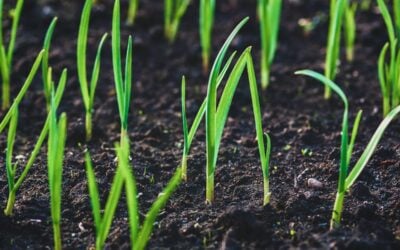
- Wild onion and wild garlic: thin, hollow, grass-like shoots that grow faster than the turf around them.
- Poa annua (annual bluegrass): a light green grassy weed that blends in until white seedheads appear in spring.
The good news is that chickweed, henbit, deadnettle, and wild onion are all easy to eliminate once your new grass is ready for treatment. Poa annua is the exception. It’s a grass closely related to fescue, so it takes a dedicated fall program rather than a standard weed treatment. Learn more about our Poa annua control program.
You may also notice crabgrass hanging on from summer. That’s normal. Some crabgrass breakthrough in August and September is expected on fescue lawns, because the spring pre-emergent has to wear off before fall seeding so the new seed can germinate. Crabgrass is a summer annual, and the first hard frost in Charlotte, usually in November, will finish it off.
The quick rule for new fescue: hold off on broadleaf weed control until the new grass has been mowed at least two or three times. On most Charlotte lawns seeded in September and October, that’s November or December.
What should you do about weeds in a newly seeded lawn?
When can you treat weeds in new grass?
Wait until new fescue has been mowed at least two or three times before applying broadleaf weed control. Young seedlings are tender, and many control products that are perfectly safe on established turf can stunt or injure grass that’s only a few weeks old. On most Charlotte lawns seeded in September and October, that point arrives in November or December. Our technicians check seedling maturity on site before treating newly seeded areas, rather than going by the calendar alone.
What can you do in the meantime?
- Keep watering for the seed, even though it helps weeds too.
- Start mowing new grass once it reaches about 4.5 inches, cutting it back to 4 inches with a sharp blade.
- Keep foot traffic and animal traffic, including pets, off seeded areas until the new grass is established.
Will the new grass crowd out the weeds?
In many cases, yes. A thick, healthy stand of tall fescue is the best long-term weed control there is. Dense turf shades the soil surface, and many weed seeds need light to germinate. That’s why we focus on getting a full stand from aeration and seeding. Every new grass plant that fills in is one less open spot for a weed.
How do you prevent weeds once the new lawn is established?
Once your new fescue has made it through winter, the plan shifts back to prevention. A spring pre-emergent stops most crabgrass before it starts, and fall-seeded fescue is usually established enough for it by late winter. Targeted broadleaf treatments handle anything that slips through. A year-round lawn care program times these applications around your seeding schedule, so you never have to choose between new grass and a clean lawn.
You made the right call investing in your lawn. Now let us help you protect it. Get your free quote and FineTurf will build a plan that handles weeds without risking your new grass, anywhere from Charlotte and Matthews to Huntersville and Fort Mill.
Frequently asked questions about weeds after aeration and seeding
Did my grass seed have weeds in it?
Not if FineTurf seeded your lawn. Our tall fescue mix contains 0% weed seed. Weeds after seeding come from seeds already in the soil, brought up by aeration and sprouted by frequent watering.
Can I treat weeds right after seeding?
No. Wait until the new grass has been mowed at least two or three times. Many weed control products can injure young seedlings.
Will crabgrass come back next year after fall seeding?
A spring pre-emergent stops most of it. Some breakthrough in August and September is normal on fescue lawns, because the pre-emergent has to wear off before fall seeding. Crabgrass dies with the first hard frost.
Is it normal to see weeds after a full lawn renovation?
Yes. A renovation exposes even more bare soil than aeration alone, so weeds are common. Thick new turf and well-timed treatments bring them under control.
Weeds in new fescue are a timing question, not a sign the seeding failed. If you’re not sure your new grass is ready for treatment, reach out or grab a free quote and we’ll take a look.