Not with a single spring spray. Poa annua is a grass closely related to tall fescue, so most control products that remove it would injure your fescue too. The most effective way to manage Poa annua in fescue is a fall program using ethofumesate, one of the few control products labeled for Poa in tall fescue, applied while the Poa is young, plus a thick, healthy lawn that leaves it no room to grow.
Every spring it happens. Your fescue looks great, and then light green clumps with fuzzy white seedheads pop up everywhere, making the lawn look patchy and uneven. Then June arrives, the Poa dies in the heat, and you’re left with brown holes. You want it gone, and you want to know why your weed control isn’t touching it. We hear this frustration from Charlotte homeowners every year.
What is Poa annua, and why is it in my fescue?
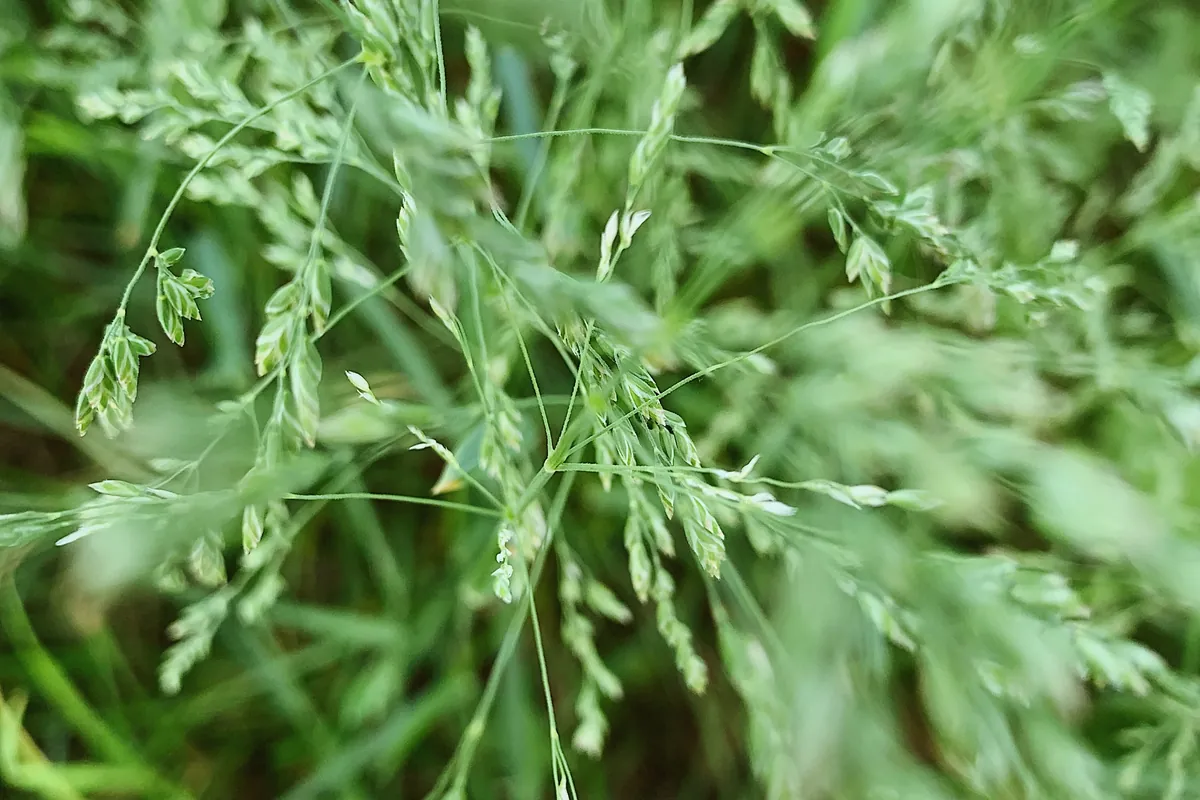
Poa annua, also called annual bluegrass, is a winter annual grassy weed. In Charlotte it germinates in fall as soil temperatures drop, grows quietly through winter, and becomes obvious in March and April when it produces white seedheads. When summer heat arrives in late May and June, most of it dies, leaving thin, tan spots behind. Each plant drops a large crop of seed before it goes, and that seed can survive in the soil for years, so the cycle repeats.
How do you identify Poa annua?
- Lighter, brighter green than tall fescue
- Soft, smooth leaves with a boat-shaped tip, like the bow of a canoe
- Low clumps that stay short even after mowing
- White, feathery seedheads in spring, even at mowing height
Is it Poa annua or Poa trivialis?
They’re cousins and often confused. Poa trivialis, or rough bluegrass, forms lime green patches that spread by creeping stems, prefers shade and wet soil, and often arrives as a contaminant in seed. It also browns out in summer heat. The two respond differently to treatment, so correct identification comes first.
Why can’t you just spray Poa annua out of fescue?
Most lawn weed control products are built to remove broadleaf weeds like dandelions and clover while leaving grass alone. Poa annua is a grass, and a cool-season grass just like tall fescue. That close relationship is the whole problem. Products that reliably remove emerged Poa annua from Bermuda or Zoysia lawns will also damage or kill fescue.
The exception is ethofumesate, a selective control product labeled for use on tall fescue. It isn’t a one-spray fix. It works best on young Poa, so it’s applied in fall as a series of treatments a few weeks apart, and results build over a season or two rather than overnight. Spraying mature Poa in spring, after the seedheads are up, gives inconsistent results. In our experience on Charlotte lawns, a single spring spray usually ends in disappointment, while a timed fall program delivers.
Spring is when Poa annua is easiest to see, but fall is when it can be controlled. If you spot white seedheads this spring, make a note of the worst areas so they can be filled when your lawn is seeded.
How do you control Poa annua in fescue lawns?
How does FineTurf use ethofumesate on fescue lawns?
We make two fall applications: the first at the end of November, while Poa is still small, and the second at the end of December, three to four weeks later. Timing is everything. Hitting Poa while it’s young stops it before it can mature and drop seed next spring.
Can you treat Poa annua and overseed in the same fall?
Yes, and that’s a big advantage. Traditional pre-emergents stop fescue seed from germinating, so they can’t be used in a seeding year. Ethofumesate can be applied to new fescue a few weeks after seeding. Because we finish seeding by November, our first application lands at least three weeks after seeding, within label timing. That means you don’t have to choose between thickening your lawn and fighting Poa.
Why does a thick lawn matter so much?
Poa annua seed needs open space and light. Dense fescue mowed at 4 inches shades the soil surface and leaves very little room for Poa to germinate. The thin spots Poa leaves behind each June are exactly where next fall’s Poa will grow, along with summer weeds. Filling those spots through core aeration and overseeding in September through October breaks that cycle.
What lawn care habits help?
- Mow at 4 inches to shade out Poa seedlings.
- Water deeply and less often, since Poa thrives in constantly moist soil.
- Relieve compaction with fall aeration, because Poa tolerates compacted clay better than fescue does.
- Bag clippings in spring while seedheads are present to reduce seed spread.
What should you do about Poa annua right now?
If it’s spring and you see Poa seedheads, don’t spend money on a spray. The Poa is about to die on its own. Note the worst areas so they can be filled during fall seeding. If it’s fall, now is the time to start treatment, even if you’re seeding. FineTurf’s year-round lawn care program already includes Poa control for Bermuda and Zoysia lawns. For fescue, Poa control is an additional program. Our Poa annua control program times treatments around your seeding schedule, so Poa control and lawn thickening work together instead of against each other. We build this plan for fescue lawns across Charlotte, Matthews, Huntersville, and Fort Mill.
You deserve a lawn that looks even and green every spring. Get your free quote and let FineTurf put a Poa annua plan in place for your lawn.
Frequently asked questions about Poa annua in fescue
Will Poa annua die on its own?
Most of it will. Poa annua dies in Charlotte’s summer heat, usually by June, but it drops seed first. Without fall treatment, it returns every year.
Can I seed my lawn and treat Poa annua in the same fall?
Yes, with the right product. Traditional pre-emergents stop fescue seed from germinating, but ethofumesate can be applied to new fescue a few weeks after seeding. FineTurf’s first application comes at the end of November, at least three weeks after our seeding wraps up.
Why does Poa annua keep coming back in my fescue?
Each plant drops a large amount of seed that can sit in the soil for years. Consistent fall treatment and a dense lawn reduce Poa annua in fescue over time.
Does Poa annua grow in Bermuda and Zoysia lawns?
Yes, but it’s easier to control there. Several control products remove emerged Poa from warm-season grasses safely, which isn’t true for tall fescue. Poa control is included in FineTurf’s year-round lawn care program for Bermuda and Zoysia lawns.
Not sure whether it’s Poa annua or Poa trivialis in your fescue? Reach out or grab a free quote and we’ll take a look.