Lawn irrigation system care by season means matching start-up, run times, and shutdown to Charlotte’s growing calendar: spring activation and a leak check, deeper and less frequent summer watering through July and August, a gradual fall taper as growth slows, and full winterization before the first hard freeze. Miss any one step and you risk a wasted water bill, a stressed lawn, or a cracked pipe you won’t find until spring.
If you’ve ever turned on your system in April to find a soaked patch by the driveway, or watched your Bermuda go crispy in July despite watering every night, you already know irrigation isn’t “set it and forget it.” Piedmont clay soil, humid summers, and swing-season freezes all push back against a one-size-fits-all schedule. FineTurf works on irrigation timing and lawn health together across Charlotte, Matthews, Huntersville, and Fort Mill, and the pattern holds: the homeowners with the healthiest lawns adjust their system four times a year, not once.
When Should You Turn On Your Lawn’s Irrigation System in Spring?
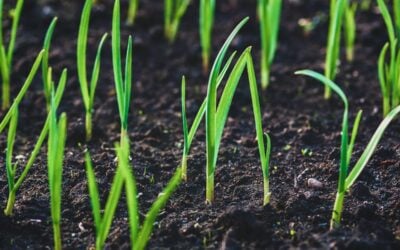
In the Charlotte area, most systems come back online between mid-March and early April, once the threat of a hard freeze has passed but before fescue hits its spring growth spurt. Turning water on too early, while the ground is still cold and wet, encourages shallow rooting. Too late, and your lawn is already drought-stressed as it tries to green up.
What Should You Check Before the First Irrigation Run?
Before you flip the valve, walk the yard and look for sunken or heaving spots near the heads, a sign of a leak or a cracked line from winter freeze-thaw cycles. Run each zone individually and watch for weak spray patterns, tilted heads, or pooling water in the clay-heavy low spots common to Piedmont soil. If your lawn thinned out over the winter, our aeration and seeding service is worth scheduling in this same stretch.
How Do You Manage Irrigation Through Charlotte’s Summer Heat?
Summer is where most irrigation systems get overworked in the wrong direction. Homeowners often add shorter, more frequent sessions as the heat climbs, but shallow daily watering trains roots to stay near the surface, exactly what makes a lawn vulnerable when a heat wave or watering restriction hits.
How Much Water Do Charlotte Lawns Actually Need in Summer?
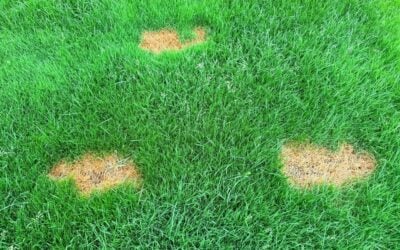
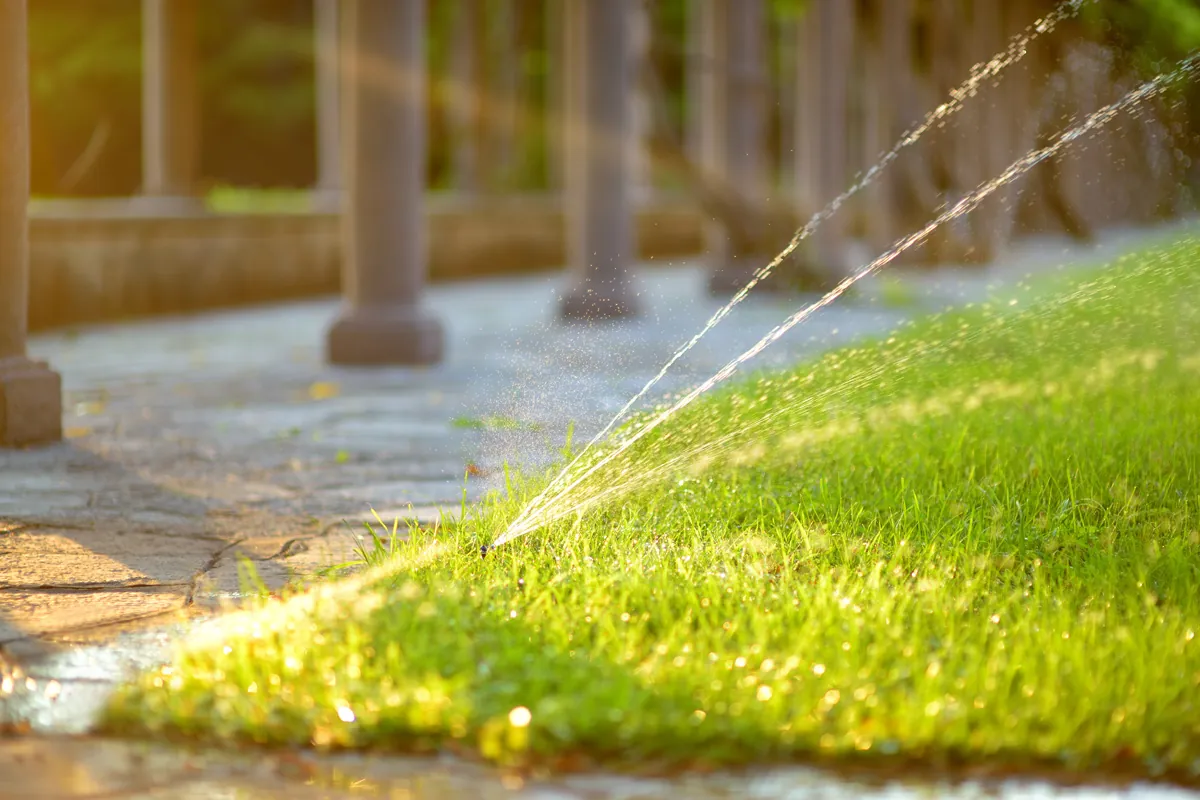
Across fescue, Bermuda, and Zoysia, target 1 to 1.5 inches of water per week, delivered in two or three deep sessions rather than daily sprinkles, even for warm-season grasses homeowners often assume need less. Run your system between 3 and 7 a.m. That window lets grass blades dry with the sunrise instead of sitting wet overnight, which matters in a climate as humid as ours. Extended leaf wetness from evening or late-night watering is one of the most common triggers we see for brown patch and other fungal issues in tall fescue lawns across the Charlotte area. If your lawn is showing circular patches or thinning despite a good watering schedule, our disease control service can identify whether irrigation timing or the turf itself needs attention. If your area is under watering restrictions, don’t just cut back and hope for the best; increase the volume per session on your allowed days so you still reach that weekly target.
Four adjustments a year, not one. Spring start-up, a summer depth change, a fall taper, and a winter shutdown — that’s the whole rhythm. Everything else is just watching your zones and fixing what drifts.
What Fall Irrigation Adjustments Keep Your Lawn Healthy?
Fall pulls two grass types in opposite directions, and it trips up more Charlotte homeowners than any other season. Cool-season fescue enters its most important growth period and needs consistent moisture for overseeding, typically mid-September through October here, while warm-season Bermuda and Zoysia head toward dormancy and need progressively less.
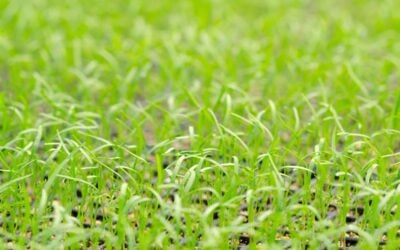
If you’re overseeding fescue this fall, keep the soil surface consistently moist with light, frequent watering until germination, then shift to the deeper, less frequent schedule once new grass is established. If your yard is Bermuda or Zoysia, ease back run times as growth slows in October, since overwatering a lawn headed for dormancy invites disease pressure without any benefit. Our lawn care program times fall applications and irrigation guidance together, so your watering schedule supports whatever your specific grass type is doing instead of working against it.
Why Does Your Lawn Irrigation System Need a Winter Shutdown?
Charlotte sits in USDA zone 7b to 8a, so we don’t get the deep, sustained freezes that irrigation systems in colder climates are built to handle. That’s exactly why local systems stay vulnerable. A single hard freeze, even one overnight dip into the low 20s, can crack a valve, split a backflow preventer, or burst a line if water is still sitting inside.
Winterize before the first hard freeze, usually by early December here, by draining the lines, blowing out residual water with compressed air, and draining the backflow preventer. Skipping this because “it doesn’t really get that cold here” is one of the most expensive mistakes we see homeowners make, precisely because Charlotte’s freezes are rare enough that people forget they still happen. Think of it like insurance: a small price to pay now that can prevent a much larger repair bill next spring.
Frequently Asked Questions
When should I turn on my irrigation system in Charlotte?
Most systems should be activated between mid-March and early April, after the last hard freeze but before fescue’s spring growth spurt begins.
How often should I run my sprinklers in summer?
Aim for two to three deep watering sessions per week between 3 and 7 a.m., totaling 1 to 1.5 inches, rather than daily short cycles.
Do I need to winterize my irrigation system if hard freezes are rare here?
Yes. Charlotte’s infrequent freezes still get cold enough to crack valves, lines, and backflow preventers, so winterizing by early December is still necessary.
Can overwatering or poor irrigation timing cause lawn disease?
Yes. Evening or overnight watering leaves grass blades wet for extended periods, a leading trigger for brown patch and other fungal issues in Charlotte-area fescue lawns.
Do Bermuda and Zoysia need less water than fescue?
Not necessarily. All three benefit from the same 1 to 1.5 inch weekly target, though timing and tapering differ by each grass type’s growth and dormancy cycle.
Ready for a Season-by-Season Irrigation Check?
If you’re not sure your system is set up right for the season you’re in, our team can walk your property, check your zones, and align your watering schedule with your lawn care plan. Schedule a lawn care consultation with FineTurf today.
Not sure which season your system is actually set up for? Reach out for a zone-by-zone look or grab a free quote, and we’ll get your run times matched to what your grass is doing right now.